1. Executive Summary
The transition from ICE to EV production is the most dangerous phase for an automotive manufacturer.
It involves massive CapEx, new tooling, and unproven processes. This period — between the start of spending
and the start of full-volume revenue — is the “Valley of Death.”
Virtual Commissioning (VC) acts as the bridge across this valley. By creating a
Digital Twin of Automation, manufacturers debug factory logic before the factory is built.
Key Outcomes
- Reduce ramp-up time by several months
- Cut onsite debugging by 50–70%
- Enable dual-mode ICE + EV flexibility during transition years
2. The Strategic Context: The High Cost of “Try and Fix”
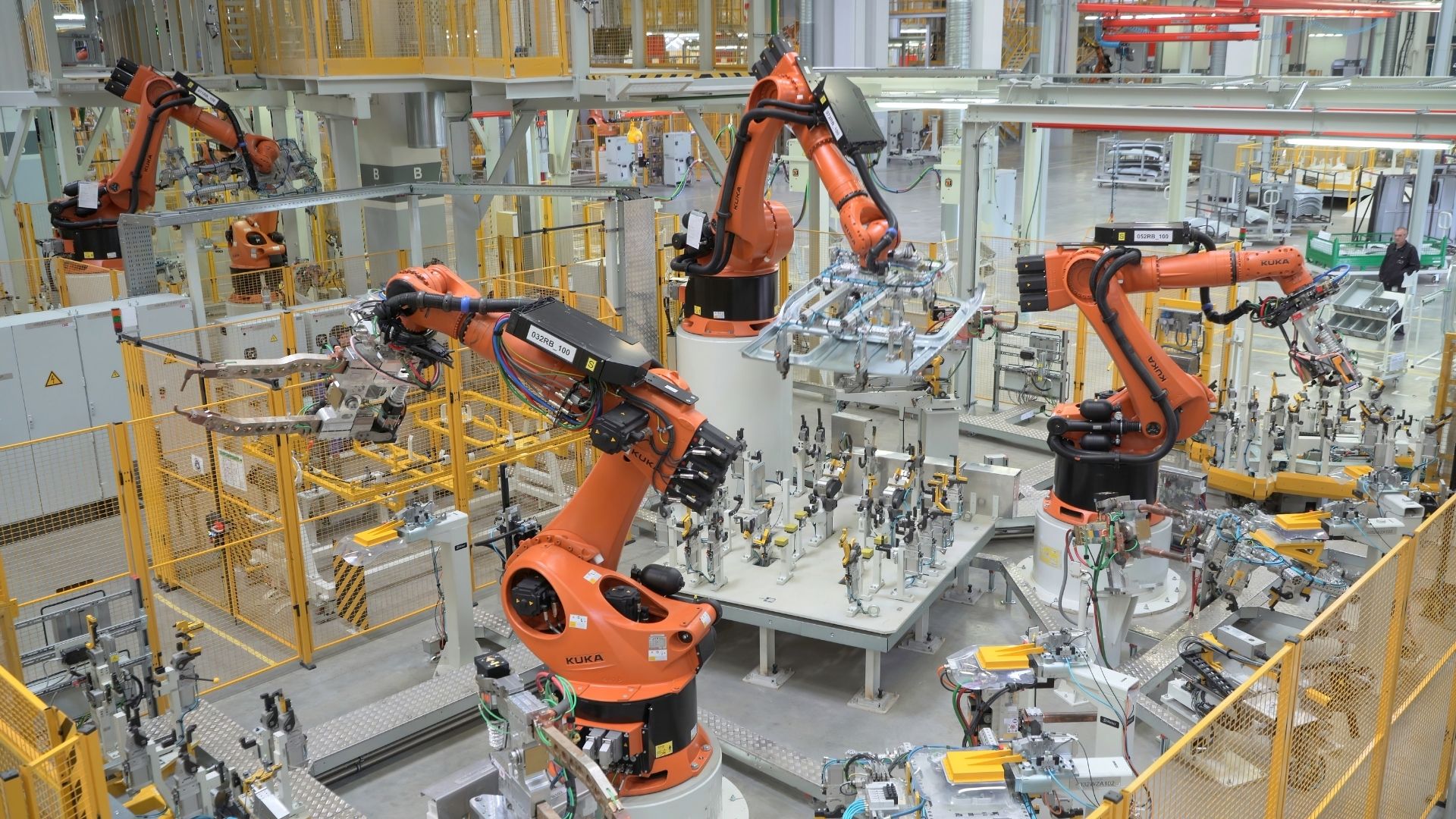
Traditionally, commissioning happens directly on the shop floor:
- Machines are installed.
- Power is turned on.
- PLC programmers upload code.
- The Crash: Robot arm hits the safety fence. Conveyor logic fails.
- The Delay: Production halts while engineers debug onsite.
In 2026, with fluctuating EV demand and aggressive launch timelines, this reactive approach
is financially unsustainable.
3. Technical Deep Dive: The Digital Twin of Automation
Virtual Commissioning shifts debugging into the virtual environment before physical installation.
3.1 The Layers of the Twin
- Geometric Twin: 3D CAD models of robots, conveyors, clamps.
- Kinematic Twin: Physics simulation — gravity, friction, collision detection.
- Behavioral Twin (Core Layer): Actual PLC code (Siemens S7, Rockwell) and HMI logic running inside the simulation.
3.2 Hardware-in-the-Loop (HIL) vs. Software-in-the-Loop (SIL)
- SIL: PLC code runs on a PC emulator — ideal for logic validation.
- HIL: Real PLC hardware connected to simulation PC — validates timing, PROFINET/EtherCAT communication, and processor load.
3.3 Scenario Testing
Virtual environments allow safe testing of high-risk edge cases:
- Emergency stop during 500kg battery handling
- Conveyor speed increase by 10%
- Extreme safety and failure scenarios
4. Financial & Operational Analysis
The Ramp-Up Savings
- Commissioning Time: Reduced by 50–70%
- Software Quality: 100% logic path validation vs ~40% in manual commissioning
- Physical Damage Risk: Eliminated during testing
The EV Flexibility
Designing dual-mode production lines (ICE + EV on same conveyor) requires complex
changeover logic. Virtual Commissioning validates transitions safely and efficiently.
5. Strategic Roadmap: 2026
Phase 1: Standardization (Months 1–3)
- Define standardized simulation libraries (Smart Components)
- Ensure vendor behavior matches digital models
Goal: Build confidence in the simulation model.
Phase 2: Critical Cell Pilot (Months 4–6)
- Apply VC to bottleneck cells (e.g., Battery Module Insertion)
Goal: Validate cycle time and safety logic.
Phase 3: Full Line Validation (Months 7–12)
- Simulate entire production flow — throughput + logic validation
Goal: Enable true “Plug and Play” installation at launch.